The manifesto
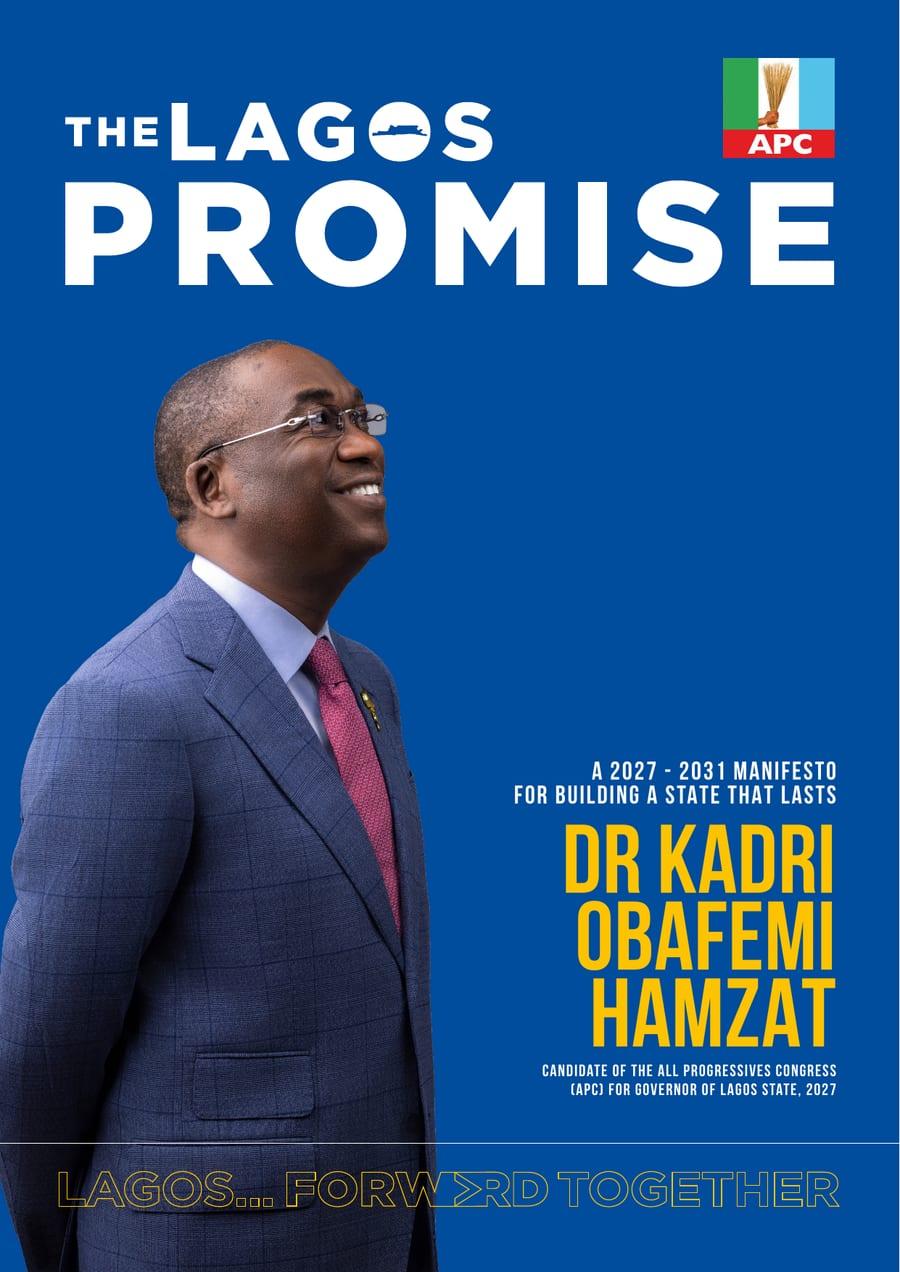
The Lagos Promise
Ìlérí Èkó. A 2027 to 2031 manifesto for building a state that lasts.
Dr. Kadri Obafemi Hamzat, the APC candidate for Governor of Lagos State, presented The Lagos Promise on Friday 30 October 2026 at the Main Dome, National Theatre, Lagos.
Published by the Hamzat 2027 Campaign, it sets out what he would do as Governor from 2027 to 2031, in seven pillars, each with its own chapters and pledges. It names 29 May 2027 as the day the work begins.
174 pages, A4.
Seven pillars
What the manifesto covers
The manifesto is set out in seven pillars. Each pillar has its own chapters, listed here by their names in the manifesto.
People First
Health care, schools and skills, safety in the neighbourhood, and how the state receives the people it serves. The pledges include 15 Maternal and Child Centres and 120 flagship primary health centres by 2031, a Skills Passport for certified technical workers, and a satellite secretariat in Badagry, Ikorodu, Lagos Island and Epe, so residents are served in their own division.
Chapters
- Our Health, Our Dignity
- The Lagos Mind
- Safe Communities
- Citizen Service
Renewal
Roads, rail, power, water, waste and drainage. Road work starts at the junctions, where the manifesto says most of the delay in Lagos traffic builds up, and the pledges include finishing the Blue Line to Okokomaiko, bringing the Adiyan Phase II waterworks into service, and reaching 95 per cent waste collection by 2030.
Chapters
- Building Greater Lagos
- IMOLE: The Lagos Power Promise
- Water Infrastructure, Treatment and Distribution
- ILE MIMO: The Clean Ground Promise
Opportunity
Jobs, trade, food, the waterways, culture and technology, and how the state pays for its plans. It covers four industrial parks at Epe, Badagry, Ikorodu and Ojo, training for one million young Lagosians in technology skills over four years, and a pledge to grow the state's own revenue by widening the tax net without raising taxes.
Chapters
- Enterprise, Industry and Trade
- Feeding Lagos
- Maritime and the Blue Economy
- The Lagos Stage and Culture
- IMO: Future Ready Lagos
- The Lagos Treasury
Machinery of Government
How the state, the local councils and the traditional institutions work together, and how justice and public services reach people. The pledges include raising the civil limit of the Magistrates' Courts from ₦10 million to ₦50 million, legal aid in every division, and a single digital identity for residents.
Chapters
- ADEHUN: The Lagos Compact
- Lagos Justice
- Digital Government and the Citizen Interface
- The Hamzat Compact
Inclusion
Women, young people, people living with disabilities, older Lagosians, children, informal traders and the diaspora. The pledges include at least half of the places in every state enterprise programme for women-led businesses, one statutory body answerable for the protection of every child, and engaging the Lagos diaspora as part of the state.
Chapters
- Obìnrin Èkó: Women and Gender
- Ọmọ́ Èkó: Youth and Sport
- Iyì Èkó & Àgbà Èkó: Dignity, Universal Access, and Elders
- The Protection of Every Lagos Child
- The Inclusive Informal Economy
- One Lagos
Security & Resilience
Public safety, flooding and the coast, emergency services, and the city's data systems. The pledges include street lighting and CCTV in residential, riverine and peri-urban communities, grading every community for flood and climate risk, and more equipment, training and stations for the fire, rescue and ambulance services.
Chapters
- The Safety of Lagos
- Resilient Lagos
- Disaster Preparedness and Emergency Response
- Smart Lagos
Everyday Dignity
Housing, getting around, and the household budget. The pledges include a path to home ownership at 10 per cent down and single-digit interest, rail, bus and ferry on one transport card, and coordinating the state's programmes so that a saving in one household cost is not lost to another.
Chapters
- Home for Lagos
- Lagos in Motion
- Cost of Living
Accountability
The Hamzat Compact
The manifesto ties every chapter to the Hamzat Compact, a cycle of six steps: promise, publish, review, listen, verify, and respond.
Every ministry, department and agency is to publish a Service Charter with its service standards and response times. An independent Performance Council is to review delivery against the published targets every quarter, in the open, and Town Halls are to rotate through Ikeja, Badagry, Ikorodu, Lagos Island and Epe.
One complaints channel, open seven days a week, is to acknowledge every complaint within 24 hours, give a first response within 7 days, and settle routine matters within 30 days.
In its closing pages, the manifesto says that "every major commitment will be published, measured, independently reviewed and openly reported."
The foreword
A foreword by President Bola Ahmed Tinubu
A government that is willing to be measured is a government that intends to deliver.
The full text
Read the full manifesto
The full text sets out each chapter's pledges in a table.
174 pages, A4.